Personal Trainer Course in Copenhagen: The Complete Guide (2026)
If you're looking for a personal trainer course in Copenhagen, you'll quickly discover that the options vary wildly. Online-only schools with no physical presence, weekend crash courses, and providers that stay deliberately vague about what you actually walk away with. The difference between them decides whether your certificate is worth anything — and whether you can make a living from it afterwards.
This guide cuts through the noise. You'll get a clear overview of what a serious personal trainer course in Copenhagen should include, why the EREPS Level 4 standard matters, what the education costs, where it takes place — and the five things to check before you enrol. Useful whether you're a local or one of Copenhagen's many international residents.
Why train as a personal trainer in Copenhagen?
Copenhagen is Denmark's densest market for personal training. It has the most fitness centres, the most potential clients, and the highest willingness to pay for one-to-one coaching in the country. That means two things for you as a future trainer.
First, there's work to be had — both as an employee in a centre and as a self-employed trainer renting space. Second, the competition is tougher, which raises the bar for your education. In a market full of trainers, it's your professional skill and business sense that decide whether you get booked — not whether you're personally in great shape.
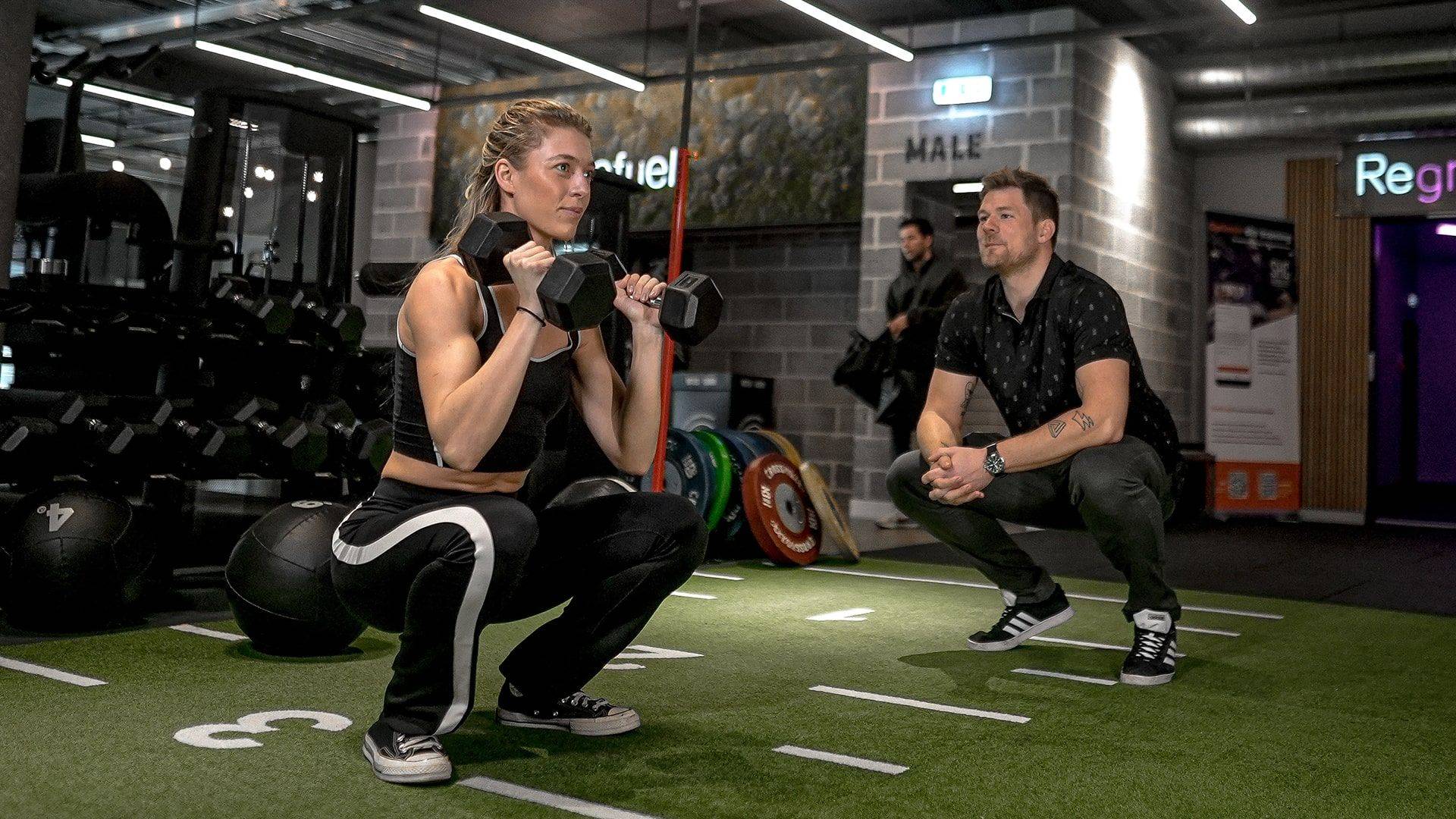
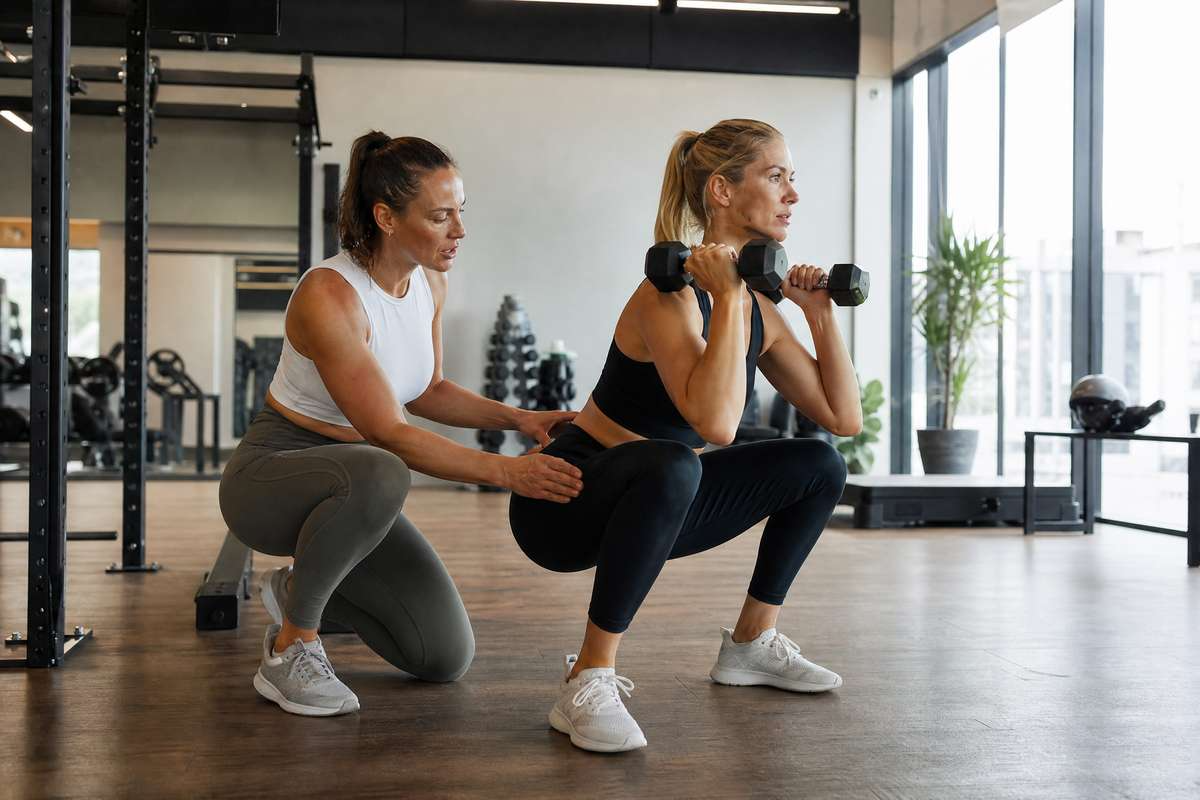
A physical course in Copenhagen also gives you something an online course can't: hands-on training with real people, instructors you can question in the room, and a network in the very city where you'll be working.
What a serious personal trainer course must include
Before you compare prices, compare content. A course that's worth the money rests on three pillars — and most cheap offers are missing at least one.
1. The professional core. Anatomy, physiology and training theory are the foundation. You need to understand how the body is built, how it responds to load and recovery, and how to design a programme that works for a specific person with specific goals.
2. The international certification. The course should lead to EREPS Level 4 (EQF Level 4), the European standard for personal trainers. It's the difference between an internal course certificate from a single provider and a qualification recognised across Europe.
3. Business understanding. This is the pillar almost everyone drops — and it's why around 80% of new personal trainers leave the industry within a year. They become skilled trainers but never learn sales, marketing and client retention. A course that genuinely sets you up treats your work as a business from day one.
If a course is missing the third pillar, you're paying to become a skilled trainer with no clients. That's an expensive way to get a certificate.
EREPS Level 4 — the international standard
EREPS (the European Register of Exercise Professionals) is the European register of exercise professionals, administered by the industry body EuropeActive. "Level 4" refers to level 4 of the EQF (European Qualifications Framework) — the level required to work independently as a personal trainer.
Why does this matter, especially if you're an expat? Because an EREPS Level 4 certification is recognised across Europe and beyond. If you move countries — or simply want to keep that door open — this is what makes your qualification travel with you. An internal certificate from a single Danish provider doesn't cross borders the same way.
You can learn how a course becomes EREPS-certified on PTinstitute's EREPS / EuropeActive certification page.
The course at a glance
PTinstitute's personal trainer education in Copenhagen is built around the points above:
- Format: 8 modules, a 140-hour syllabus — around 25% above EuropeActive's minimum of roughly 112 hours.
- Location: Østbanegade 121, 2100 København Ø — central and easy to reach.
- Price: 18,495 kr, with an interest-free instalment option. Includes all course material, the online learning platform, and free training in all Sporting Health Club centres during the course.
- Certification: EREPS Level 4 via EuropeActive.
- Next kick-off: August. Spots fill up, so early sign-up is recommended.
You can see the full 140-hour syllabus and meet the instructors.
What you'll learn — the 8 modules
A serious course covers the whole journey from anatomy to invoicing. At PTinstitute the 140 hours are spread across eight modules that make you both professionally sharp and able to run a business:
- Anatomy — body structure, the muscular and skeletal systems, and the terms you need to communicate clearly.
- Physiology — energy systems, metabolism, and how the heart, lungs and muscles respond to training.
- Training theory — load, progression, variation, recovery, and designing effective programmes.
- Practical training — movement analysis, correct technique, injury prevention and basic biomechanics.
- Business understanding — starting a business, business planning, sales, marketing and accounting.
- Lifestyle management — helping clients build lasting habits through diet, exercise, sleep and mental wellbeing.
- Coaching — active listening, goal-setting and the techniques that get clients to stick with it.
- Nutrition — the fundamentals of nutrition so you can guide clients within your scope of practice.
The combination is the point: the professional modules give you the craft, and the business and client modules make sure you can earn a living from it. See the full 140-hour syllabus for the detail in each module.
Taking the course in English? What internationals should know
Copenhagen has a large international community, and you don't have to be a native Danish speaker to build a career here. PTinstitute caters to English-speaking students — there's a dedicated English course page and a free intro evening in English where you can get an honest feel for the education before committing.
The most important point for internationals: because the certification is EREPS Level 4, it's internationally recognised — so the qualification you earn in Copenhagen is valid whether you stay in Denmark or move on. To confirm the language of your specific cohort and any practical details, reach out via the English intro evening or contact the institute directly.
5 things to check before you enrol
Use this checklist on any personal trainer course in Copenhagen before you pay:
- Does it lead to EREPS Level 4? Will you be registered so you can be looked up on ereps.eu afterwards? Vague phrasing like "recognised certificate" without reference to EQF/EREPS is a red flag.
- How many teaching hours? Is it right at the minimum (~112) or well above? Hours are the best proxy for depth.
- Is there a business module? Sales, marketing and client retention decide whether you can live off it. If it's missing, half the value is too.
- Is the teaching physical? Hands-on practice with real people can't be replaced by video.
- What happens after the course? Access to centres, a network, mentoring and job opportunities make the difference between a certificate and a career.
From course to career in Copenhagen
A course is only worth something if it leads to work. As an EREPS Level 4 certified personal trainer, you can work in fitness centres, rent space and take your own clients, or build an online coaching business on top.
PTinstitute has a particular advantage here: a direct link with Sporting Health Club, which regularly looks for new training talent across its Copenhagen centres. That means the path from finishing the course to your first clients is shorter than at most places — you train where the jobs are.
FAQ
How much does a personal trainer course in Copenhagen cost?
PTinstitute's personal trainer education in Copenhagen costs 18,495 kr. The price includes all course material, access to the online learning platform, EREPS Level 4 certification and free training in all Sporting Health Club centres during the course. An interest-free instalment plan is available.
How long is the personal trainer course?
The education consists of 8 modules with a total of 140 hours of teaching — around 25% above EuropeActive's minimum. It combines theoretical teaching, hands-on training sessions and mentoring.
Can I take a personal trainer course in Copenhagen in English?
Yes — PTinstitute caters to English-speaking students, with English course information and a free intro evening in English. Because the certification is EREPS Level 4, it's internationally recognised. Contact the institute or attend the English intro evening to confirm the language of your specific cohort.
What certification will I get?
You become EREPS Level 4 certified through EuropeActive — an internationally recognised standard that lets you work as a personal trainer across Europe. PTinstitute pays your first year of EREPS registration.
Do I need prior experience to enrol?
No. There are no formal entry requirements. The course suits both complete beginners and those who already train and want to turn it into a profession.
A personal trainer course in Copenhagen is an investment in a career, not just a certificate. Choose one that's physical, current, EREPS Level 4 certified and business-oriented — so you don't just become skilled, but can actually make a living from it.
Ready to take the next step? See PTinstitute's personal trainer education, price and next start, or come to a free intro evening in English.
Don't miss a beat!
New moves, motivation, and classes delivered to your inbox.
We hate SPAM. We will never sell your information, for any reason.